The night was cold.
The lights of the emergency room glowed faintly against the dark October sky.
At Beacon Memorial Children’s Hospital, a blue van pulled up to the entrance without warning.
Inside was a man — quiet, hurried, expressionless.
He didn’t speak as nurses rushed forward.
He didn’t explain.
He simply opened the door, let them see the small, lifeless body in the back seat — and then, as they carried the child away, he
drove off into the night.
He never gave his name.
He never looked back.
The child was unresponsive.
Her small body bore the unmistakable marks of violence — bruises, swelling, and injuries that no three-year-old should ever endure.
Doctors worked frantically, their voices low and urgent.
They called her “Jane Doe” because they didn’t yet know who she was.
All they knew was that she was fighting for her life — and losing.
Two hours later, the hospital phone rang.
A young mother’s trembling voice filled the line.
She had just received a strange call from her daughter’s father.
He had told her, vaguely, to “go check on her daughter at the hospital.”
No explanation.
No warning.
Just a cryptic, chilling message.
By the time she arrived, her little girl was surrounded by machines, tubes, and silent faces.
She recognized her immediately —
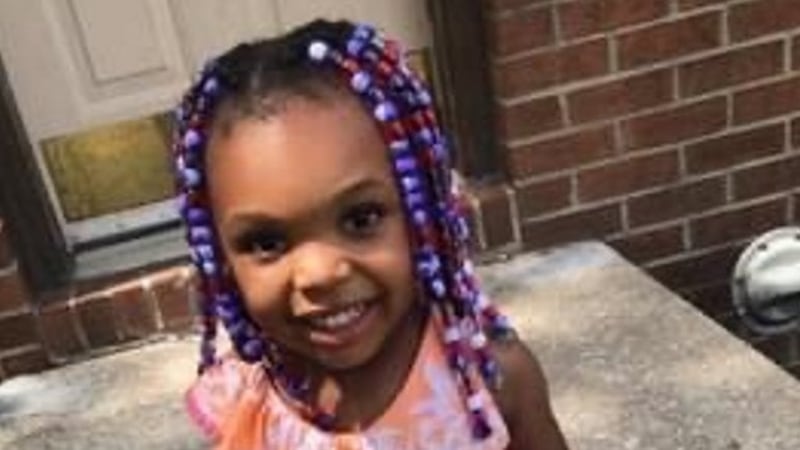
three-year-old Kardie Rose Weathersby, her baby, her world.
The room froze as she screamed her daughter’s name.
But Kardie didn’t move.
Her eyes were closed.
Her small chest rose and fell with the rhythm of a ventilator.
Doctors did everything they could.
For two days, they fought to keep her alive.
But the injuries were too severe — trauma to the head, bleeding inside the brain, and multiple signs of abuse.
On October 15, 2020, just after dawn, Kardie Rose was pronounced dead.
Three years old.
Three years of laughter, curiosity, and love — gone in an instant.
An autopsy confirmed what no one wanted to believe.
The cause of death: blunt-force trauma to the head.
The manner of death: homicide.
Her body bore additional injuries — bruises on her arms and back, older marks of pain that told a story no child should have to tell.
Detectives began piecing together the timeline.
Kardie had been in the care of her father, Trevion Shaver, 23, for several days.
He was the last person to see her alive.
And the same man believed to have left her at the emergency room that night.
At first, Trevion offered explanations that changed with every question.
He said Kardie had an allergic reaction
.
Then he said she fell in the bath.
Later, he said she fell out of a car.
But none of it matched the injuries.
None of it explained the fractures, the bleeding, the pattern of blows.
Finally, under pressure, he told the truth — or something close to it.
He said he had gone “overboard” while disciplining her.
A chilling understatement for what he had done.
When the news broke, the community was shattered.
A three-year-old — beaten to death by her own father.

Neighbors wept.
Strangers left toys and candles outside the hospital doors.
Even police officers, hardened by years of tragedy, struggled to speak.
Because this wasn’t just violence.
This was betrayal.
Kardie’s mother — young, heartbroken, and brave — faced every parent’s worst nightmare.
She had trusted the man who shared her child’s blood.
She had believed he could love Kardie as deeply as she did.
Instead, he destroyed the life they built together.
And left her with a lifetime of grief.
In the weeks after the funeral, investigators worked relentlessly.
They traced calls, reviewed surveillance, and matched medical findings to the timeline.
Every clue pointed back to one person — Trevion Shaver.
He was arrested and charged with murder and aggravated battery.
The courtroom fell silent on December 14, 2023, when the verdict was read.
After years of waiting, justice spoke.
The judge found Trevion Shaver guilty on all counts.
His actions, the court said, were “especially cruel, showing extreme indifference to human life.”
Witnesses described the horror of that night.
A nurse recalled the sound of the van door opening — and the sight of a limp little body, motionless and cold.
Another remembered how quickly the man drove away, leaving behind only silence and questions.
And the mother — trembling, weeping, holding her child’s small hand as doctors pronounced her gone — could barely speak.
Her world ended that night.

Kardie’s name now lives in the hearts of all who heard her story.
She was a joyful, gentle child.
She loved coloring books, bubble baths, and pink dresses.
Her laughter could turn even the hardest day into light.
She adored her mother and followed her everywhere — holding onto her hand, her skirt, her heart.
The photographs tell the story best.
In one, she’s laughing with her hair in pigtails.
In another, she’s blowing kisses toward the camera.
Her eyes sparkle — full of innocence, full of life.
No one looking at those pictures could imagine the cruelty that awaited her.
And that’s what makes it unbearable.
For the medical staff who tried to save her, those images never fade.
They still remember the sound of the monitors.
The desperate calls for her name.
The way her small hand rested on the hospital blanket, too still, too quiet.
They remember her mother’s scream.
They remember the silence that followed.

After the trial, prosecutors spoke publicly.
They said no sentence could ever be enough.
Under state law, Trevion Shaver faces 45 to 65 years for murder, and up to 12 years for aggravated battery.
But the truth is, there’s no number that measures a child’s life.
No punishment that can balance what was lost.